


Oil's Deep V Rebound, Gold Falls: Geopolitical Risks Repriced
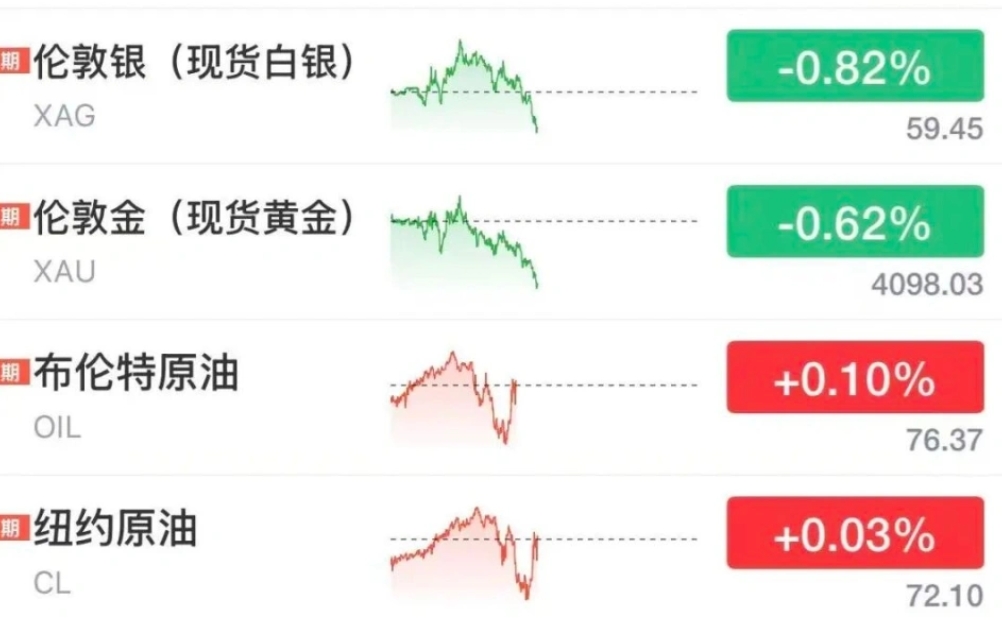
Geopolitical Ripples Spread: A Global Risk Repricing as Oil Posts a Deep V Rebound and Gold Falls Below $4,100
Keywords: international oil prices, gold prices, geopolitics, Israel, Iran, safe-haven assets, Middle East tensions, market volatility
Introduction
On July 13, 2026, global financial markets experienced a sharp shock. International oil prices staged a striking deep V-shaped rebound in a very short time, while gold—usually regarded as the preferred safe-haven asset—unexpectedly fell below the important psychological level of $4,100. At the same time, reports said Israel was willing to take part in strikes against Iran, further escalating tensions in the Middle East. These seemingly contradictory market signals actually reflect a complex landscape in which global risk appetite and safe-haven sentiment are intertwined. This article offers an in-depth professional analysis from the perspectives of geopolitical developments, commodity-market swings, and the repricing of safe-haven assets.
1. International Oil's Deep V Rebound: The Short-Term Return of the Geopolitical Premium
1.1 From Sharp Drop to Sharp Rise
Earlier this week, international oil prices fell sharply amid expectations of slower global growth and rumors that some oil-producing countries would raise output. However, once news emerged that Israel might join strikes against Iran, market sentiment reversed quickly. Brent crude and WTI crude both rebounded strongly from their lows within hours, forming a classic deep V-shaped move.
This rebound was not accidental. The Middle East has always been the “heartland” of global oil supply, and any escalation involving Israel and Iran could directly threaten shipping safety in the Strait of Hormuz. According to the International Energy Agency, about one-fifth of the world's oil shipments pass through this strait. If the situation spins out of control, the risk of supply disruption will rise sharply, pushing oil prices higher.
1.2 The Interplay of Bullish and Bearish Factors
However, the basis for this oil rebound is not solid. On one hand, rising geopolitical risk did provide short-term support for oil prices; on the other hand, weak demand in major global economies remains a drag. The Fed's tightening cycle has not fully ended, manufacturing in the euro area continues to contract, and China's economic recovery has also been weaker than expected. These macro factors limit oil's upside.
Therefore, the current oil-price move looks more like a short-term return of the “geopolitical premium” rather than a genuine improvement in supply-demand fundamentals. Market participants should be alert to the possibility of sharp swings ahead.
2. Gold Falls Below $4,100: Is the Safe-Haven Glow Fading or Is This a Structural Turn?
2.1 An “Abnormal” Move for a Safe-Haven Asset
Under traditional market logic, worsening Middle East tensions should push gold prices higher. Yet this time gold fell below $4,100, hitting a recent low. The abnormal move has sparked widespread discussion.
2.2 Unpacking the Drivers of the Decline
First, the strong rebound in the dollar index is the core factor suppressing gold. As geopolitical uncertainty rose, capital flowed into the dollar for safety, pushing the dollar index higher and putting pressure on gold, which is priced in dollars. Second, the rise in Treasury yields has also weakened gold's appeal. The opportunity cost of holding gold rises as rates increase, prompting some investors to sell gold and move into bonds.
At a deeper level, the definition of a “safe-haven asset” is changing subtly. In the current environment, the dollar, U.S. Treasuries, and even the currencies of certain countries may offer more liquidity and safety than gold in the short term. This does not deny gold's long-term value; rather, it reflects a shift in short-term market preference.
2.3 Gold's Outlook Ahead
From a technical perspective, $4,100 had been an important support level, and once broken, it may turn into resistance. If the international situation does not deteriorate beyond expectations, gold may test the round-number level of $4,000. However, if the Middle East conflict escalates further, gold could regain safe-haven buying. Investors should closely watch Fed policy developments and Iran's official response.
3. Israel's Willingness to “Join the Fight”: A Key Variable in the Middle East Chessboard
3.1 Reliability of the News and Strategic Implications
The report that “Israel is willing to participate in strikes against Iran” is still at the media-leak stage, but it has already triggered a sharp market reaction. From a strategic standpoint, Israel has long viewed Iran's nuclear program as an existential threat, and in recent years it has intensified infiltration and sabotage operations against Iranian military facilities.
By signaling a willingness to join the fight at this moment, Israel may be aiming at several things: first, to pressure the U.S. and the international community into a tougher Iran policy; second, to test Iran's reaction and pave the way for possible future military action; and third, to reshape the security landscape in the Middle East and weaken Iran and its proxy forces.
3.2 Potential Impact on Global Markets
If Israel does take part in strikes, the Middle East situation will shift from a “proxy war” to a “direct conflict.” That would not only push oil prices even higher, but could also trigger another surge in safe-haven assets such as gold and silver. At the same time, global stock markets—especially emerging-market equities—would face capital outflow pressure.
In addition, the positions of other major powers such as Russia and China will become important variables. If the Middle East situation gets out of control, global energy supply chains, transport chains, and even the financial system could suffer severe shocks.
4. Conclusion: Strategy in an Uncertain Environment
The deep V rebound in international oil prices and gold's unexpected decline reveal the extreme uncertainty in today's market. Geopolitical events are influencing asset pricing at an unprecedented speed, and the traditional boundaries between safe-haven and risk assets are becoming increasingly blurred.
For investors, several points are worth careful consideration:
- Stay flexible and value liquidity: In a volatile market, holding highly liquid assets matters more than blindly chasing safety.
- Diversify and manage risk: Do not put all your bets on gold or oil; cross-asset diversification should be considered.
- Track event developments: Moves by Israel and Iran will be the core variable for markets over the coming weeks. Any sudden news could trigger chain reactions.
In short, the current global financial market is in a special period where “geopolitics leads and fundamentals follow.” Only by staying calm and analyzing rationally can investors find relatively certain direction amid uncertainty.
Disclaimer: This article represents the author's views only and does not constitute investment advice. Markets carry risk; invest with caution.

The content on this site is for learning and communication purposes only. It does not provide financial services such as account opening, capital allocation, discretionary trading, or insider trading. Do not trust any private messages recommending stocks or following orders within the site.