


Emerging Markets Central Bank Gold Buying Surge Escalates: How the 2026 Gold Reserve Diversification Strategy Will Reshape the Precious Metals Landscape
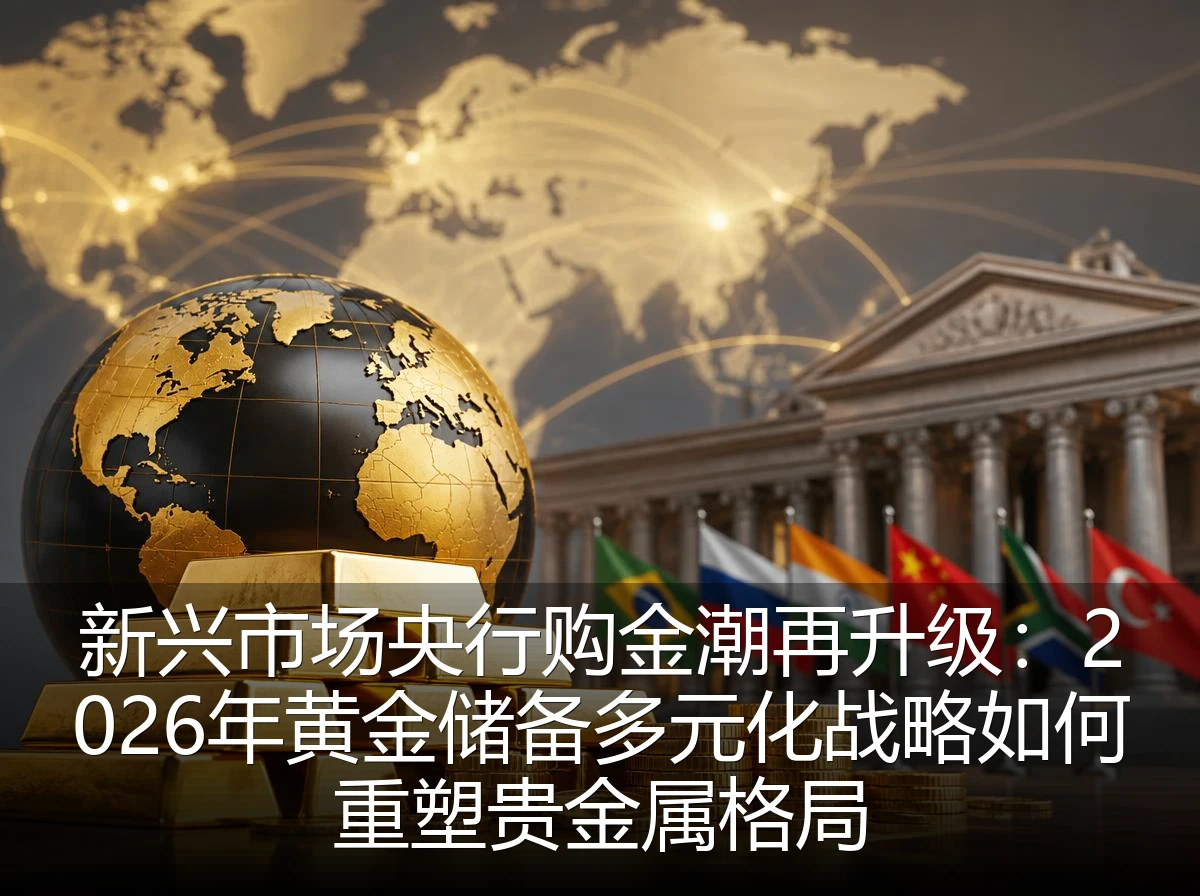
In 2026, the global central bank gold buying enthusiasm will continue to rise, emerging market countries will become the main force, promoting reserve diversification through increased gold reserves. This trend not only provides long-term support for gold prices but also reshapes the structure of the precious metals market. This article deeply analyzes the motives, latest developments, and potential impact on the market of central bank gold buying in emerging markets, interpreting the strategic
In August 2026, the precious metals market continued its volatile pattern, with gold prices hovering near the $3000 mark, while silver benefited from industrial demand and safe-haven sentiment, showing relatively firm performance. Against this backdrop, central bank gold buying dynamics have become the focus of market attention. Latest data from the World Gold Council shows that in the first half of 2026, central banks globally net gold purchases reached a record 650 tons, with emerging market nations contributing over 80% of the increase. This trend not only reflects the growing emphasis on diversifying reserve assets by countries but also injects long-term support into the precious metals market.
## Emerging Market Central Bank Gold Buying: From "Passive Holding" to "Active Positioning"
In recent years, central bank gold buying behavior in emerging market nations has changed significantly. In the past, central bank gold buying was mainly driven by the need for passive reserve structure adjustments, whereas increasingly, more countries view gold as a core strategic asset and actively increase allocations. For example, the Indian central bank increased gold holdings by 50 tons in the second quarter of 2026, raising its gold reserve ratio to 8.5%; while the Chinese central bank has not released specific data, the market generally expects it to continue increasing holdings to counter dollar volatility risks; the Russian central bank is reducing its dependence on the Western financial system by increasing gold reserves.
This shift is underpinned by the pressing need of emerging market nations for "de-dollarization." As the uncertainty in US monetary policy increases, the status of the dollar as the global reserve currency is being challenged, prompting countries to seek alternative assets. Gold, as a hard asset with no credit risk, has become the top choice. Furthermore, geopolitical tensions (such as Middle East situations, Russia-Ukraine conflict) are also prompting countries to increase gold reserves to enhance financial security.
### Drivers of Central Bank Gold Buying: The Dual Logic of Diversification and Hedging
* **Demand for Reserve Diversification**: Traditionally, central bank reserves were dominated by dollar assets, but with increased dollar volatility, countries are beginning to diversify risks. The independence and stability of gold make it an ideal tool for diversification. For example, Brazil increased its gold reserve ratio from 5% to 7% in 2026 to reduce dependence on the dollar.
* **Geopolitical Hedging**: The current global geopolitical situation is complex, with factors like Middle East conflicts and great power competition increasing financial risks. Gold, as a safe-haven asset, can effectively hedge geopolitical risks. For example, when Middle East tensions are high, the Saudi Arabian central bank increases gold purchases to stabilize its currency and financial system.
* **Economic Structure Adjustment**: The economic structure of emerging market nations is shifting from export dependence to domestic demand-driven growth. Increasing gold reserves helps enhance the creditworthiness and stability of the domestic currency. For example, India, as the world's largest gold consumer, enhances the resilience of the rupee by increasing central bank gold reserves.
## Latest Dynamics of Central Bank Gold Buying in 2026: Emerging Markets Lead the Trend In the first half of 2026, central bank gold purchases in emerging markets set a new historical high. World Gold Council data shows that countries such as India, China, Russia, Turkey, and Kazakhstan are major gold buyers. Among them, the central bank of India increased gold holdings by 50 tons in the second quarter of 2026, bringing its total gold reserves to 800 tons; although China's central bank has not released specific data, the market expects its purchases to exceed 100 tons in the first half of the year. The central bank of Russia increased its gold reserves, raising its gold share to 23%, making it one of the countries with the highest proportion of gold reserves globally.
In addition, some smaller country central banks have joined the gold buying trend. For example, the central bank of Kazakhstan increased gold holdings by 20 tons in the first quarter of 2026 to cope with fluctuations in its national currency, the tenge. The central bank of Turkey is stabilizing the lira exchange rate through gold reserves. The actions of these countries indicate that central bank gold buying has become a global trend rather than a choice by individual countries.

Impact on Precious Metals Market: Long-term Support and Short-term Volatility
The impact of central bank gold purchases on the precious metals market is mainly reflected in two aspects: long-term support and short-term volatility. In the long term, central bank gold purchases increase demand for gold, providing solid support for gold prices. The World Gold Council expects that global central bank gold purchases will reach 800 tons in 2026, a new historical high, which will drive gold prices to gradually rise. In the short term, the pace of central bank gold purchases will affect market sentiment; for example, gold prices may rise temporarily when central banks in emerging markets make concentrated purchases, while gold prices may face downward pressure when purchases slow down. Furthermore, central bank gold purchases also affect the silver market. As silver is a precious metal linked to gold, a surge in central bank gold purchases will drive demand for silver. For instance, in the first half of 2026, silver prices benefited from industrial demand and safe-haven sentiment, rising by over 10%, partly due to improved market sentiment brought by central bank gold purchases.Industry Interpretation: Strategic Considerations Behind Central Bank Gold Purchases
Analysts believe that central bank gold purchases are a strategic move by emerging market countries to respond to changes in the global economic landscape. Firstly, the weakening of dollar hegemony has led countries to seek alternative reserve assets, making gold the best choice. Secondly, increased geopolitical risks encourage countries to increase gold reserves to enhance financial security. Finally, economic structural adjustments require stable reserve assets, and the independence and stability of gold meet this demand. For example, analysts at Futda International point out that central bank gold purchases will be the main driver of the gold market in 2026, especially the buying behavior of emerging market countries, which will push gold prices to gradually break the $3000 threshold. Simultaneously, the silver market will also benefit from industrial demand and safe-haven sentiment, with prices expected to continue rising.Future Outlook: The Long-term Trend of Diversification of Gold Reserves
Looking ahead, the trend of central bank gold purchases will continue. As the global economic landscape changes, emerging market countries will place greater strategic value on gold and increase their gold reserves. The World Gold Council expects that global central bank gold purchases will reach 900 tons in 2027, with emerging markets contributing over 85%. This trend will provide long-term support for the precious metals market, driving gold and silver prices to gradually rise. At the same time, central bank gold purchases will also affect the global financial system. As gold reserves increase, the credibility of national currencies will improve, and the dominance of the dollar may be further weakened. This will bring new opportunities to the precious metals market and provide investors with a timely opportunity to allocate gold for the long term.
The content on this site is for learning and communication purposes only. It does not provide financial services such as account opening, capital allocation, discretionary trading, or insider trading. Do not trust any private messages recommending stocks or following orders within the site.