


Middle East Situation Suddenly Tightens, Safe-Haven Funds Rush into Gold and Silver, Safe-Haven Value of Precious Metals Re-emphasized
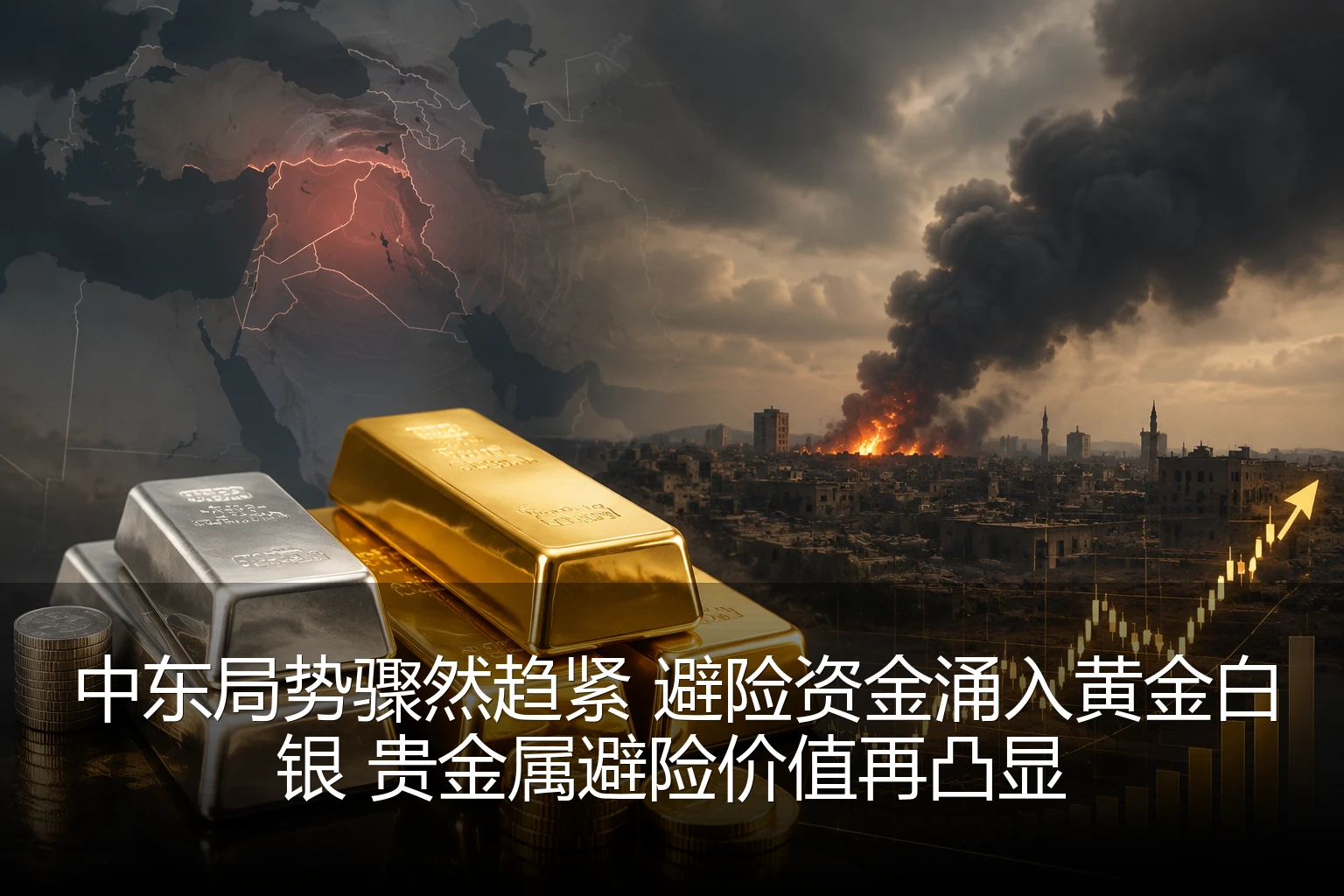
During Asian trading hours on July 31, international spot gold prices rose rapidly, briefly breaking through the $4,100 per ounce mark, with a daily gain of over 1.5%; silver prices also strengthened, standing near $31 per ounce. Market analysts widely believe that the direct catalyst for this precious metals rally was the sudden escalation of geopolitical tensions in the Middle East, triggering strong safe-haven demand among global investors.
Geopolitical Risings Ignite Safe-Haven Sentiment
According to multiple international media reports, on the night of July 30 local time, Israel launched airstrikes on multiple military targets in Iran in response to rocket attacks by Iran-backed armed forces on northern Israel. After the attack, Iran stated it would take "devastating retaliation," causing the Middle East situation to deteriorate rapidly. The UN Security Council held an emergency closed-door meeting, but serious differences in positions prevented a ceasefire consensus.
Geopolitical risks have always been one of the most sensitive catalysts for precious metal prices. Gold, as a traditional safe-haven asset, often attracts significant capital inflows during wars, conflicts or sanctions. This conflict not only directly heightened tensions in the Middle East but also raised concerns about global energy supply security. International oil prices also rose sharply, with Brent crude rising over 3%, further strengthening market expectations of inflation resurgence and giving gold's inflation-hedging attributes dual support.
Market Performance and Capital Flows
From a technical perspective, London spot gold rose from around $4,035 at last Friday's close to a high of $4,108 this morning, a two-week high. Silver performed similarly impressively, with spot silver rising from around $30.2 to a high of $31.3, and the gold-silver ratio slightly falling to around 131, showing greater elasticity in silver.
In terms of capital flows, the world's largest gold ETF, SPDR Gold Trust (GLD), reported an increase of 4.6 tons in holdings in the evening of yesterday, marking the third consecutive day of net inflows. The silver ETF (SLV) also saw small increases in holdings. This indicates that institutional investors are rapidly adjusting their portfolios, increasing allocations to safe-haven assets.
Analysts: Safe-Haven and Inflation Expectations Resonate
A precious metals analyst at Singapore's Seacons Asia pointed out that this precious metals rally is not solely driven by safe-haven demand but by multiple factors: first, the escalation of geopolitical conflicts directly boosts safe-haven demand; second, rising oil prices trigger inflation concerns, suppressing real interest rate expectations and providing additional momentum for gold; third, the recent weakness of the US dollar index under Fed policy uncertainty, with the dollar falling from around 104 to below 103.5, has also reduced upward pressure on dollar-denominated precious metals.
"Historically, safe-haven rallies triggered by geopolitical conflicts often have short-term explosive power, but their sustainability depends on whether the conflict further expands," the analyst said. "If the situation is contained, gold prices may retrace some gains; conversely, if it evolves into a prolonged standoff, precious metals could embark on a new trend of upward movement."
Technical Bullish Signals Strengthen
Regarding technical indicators, gold's daily K-line has recovered the 5-day and 10-day moving averages, with short-term moving averages showing a bullish arrangement; the MACD indicator formed a golden cross above the zero axis, with red momentum bars expanding; the RSI indicator rose to around 65, not yet entering the overbought zone, indicating that bullish momentum still has room to release. The daily structure of silver is similar, but there is resistance from previous dense trading areas around $31.5. If it can effectively break through, the next target points to the $32 integer level.
Trading Strategy and Risk Warnings
For investors, precious metals trading in the current environment needs to balance both trend and risk. Short-term bulls can continue holding, but need to pay attention to rapid changes in geopolitical news, setting timely take-profit and stop-loss levels. Medium-term investors can look for opportunities to build positions in batches after pullbacks, and given that inflation expectations may rise due to oil prices, gold's inflation-hedging allocation value remains prominent.
However, analysts also remind that geopolitical events carry high uncertainty, and market sentiment could reverse quickly. Additionally, the US will release July non-farm employment data this Friday, and if the data significantly exceeds expectations, it may strengthen expectations of further Fed rate hikes, putting pressure on precious metals. Therefore, investors are advised to reasonably control position sizes and avoid excessive chasing of highs.
Future Outlook: Focus on Conflict Developments and Macroeconomic Data
Looking ahead, the evolution of the Middle East situation remains the primary variable affecting gold and silver prices in the short term. On one hand, if conflict escalation leads to disruptions in Hormuz Strait shipping and further oil price surges, gold could challenge previous highs; on the other hand, if diplomatic mediation shows signs of progress and safe-haven sentiment cools, it may trigger profit-taking in the market. Meanwhile, Fed officials will deliver speeches next week, and the market will look for clues about the interest rate path from their wording. This fundamental factor, together with geopolitical risks, will jointly dominate precious metals markets.
In a high-uncertainty environment, precious metals market volatility may significantly increase. While capturing safe-haven rallies, investors must remain rational and focus on risk management. Seacons Asia will continue to track the latest developments, providing timely and professional precious metals market analysis for readers.

The content on this site is for learning and communication purposes only. It does not provide financial services such as account opening, capital allocation, discretionary trading, or insider trading. Do not trust any private messages recommending stocks or following orders within the site.