


Gold and Silver Tumble: A Deeper Read on the Market's Shifting Tone
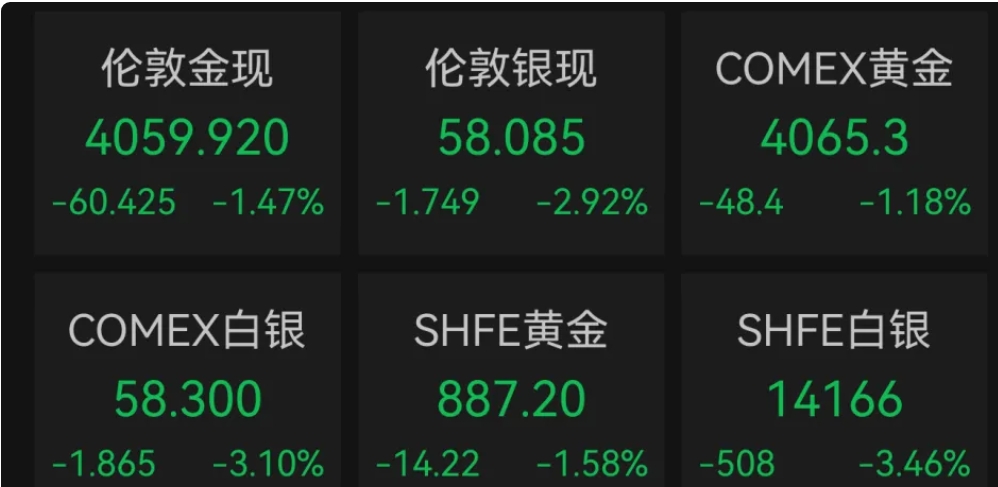
Gold and Silver Both Plunge——A Deeper Look at the Market's Shift
Keywords: gold, silver, precious metals, decline, market analysis, inflation expectations, dollar index
Introduction
On July 13, 2026, the global precious metals market saw a sharp wave of selling. Spot gold fell 1.47% on the day, while silver dropped 2.92%, marking a rare synchronized downswing. As safe-haven assets and inflation hedges, the weakness in both metals drew broad market attention. Against a backdrop of unclear Federal Reserve rate policy, uneven global recovery momentum, and easing geopolitical risk premiums, was this drop a short-term technical pullback, or a sign of a deeper cyclical turn? This article examines the move through the lenses of macroeconomics, capital flows, and technical analysis.
1. Real-Time Market Action: Structural Signals Behind the Drop
Looking at the tape, spot gold retreated from its highs and briefly touched around $2,310/oz before closing down 1.47%. Silver, under dual pressure from industrial and investment demand, plunged nearly 3%, and the silver/gold ratio widened sharply, reflecting silver's vulnerability as a semi-industrial metal. Notably, the drop came with heavier trading volume, pointing to institutional selling rather than panic exits by retail investors. CME gold futures open interest also declined, suggesting that longs were more willing to close positions proactively.
2. Drivers of the Decline: A Stronger Dollar and Repriced Rate Expectations
1. A Sharp Rebound in the Dollar Index
Several Federal Reserve officials have recently taken a hawkish stance, reiterating the view of keeping rates higher for longer. Market expectations for rate cuts this year were reduced from three to one, pushing the dollar index above the 105 level. The strong negative correlation between the dollar and gold reappeared, forcing investors to cut gold exposure to lock in dollar gains.
2. The Drag From Higher Real Rates
The U.S. 10-year TIPS yield (real rate) rose above 2.1% after the data release. As a zero-yield asset, gold's holding cost rises meaningfully when rates climb. That directly weakens gold's appeal, especially for institutional investors, as its value proposition versus higher-yield sovereign bonds is deteriorating.
3. The Two-Edged Effect of Inflation Data
Although U.S. June CPI continued to ease to 3.2%, core services inflation remained sticky, which the market read as a sign that the Fed cannot pivot quickly toward easing. Falling inflation expectations instead dampened demand for gold as a store of value —— once investors no longer fear out-of-control inflation, gold's safe-haven premium naturally fades.
4. Silver Weighed Down by Its Industrial Role
Beyond its financial characteristics, about 50% of silver demand comes from industrial uses such as solar panels and electronic components. Recently, manufacturing PMIs across major economies have generally stayed below the boom-bust line, China's recovery has been weaker than expected, and European manufacturing continues to contract. Slower industrial demand, combined with overcrowded speculative long positions, made silver's decline even steeper.
3. Capital Flows and Market Sentiment: The Safe-Haven Logic Is Being Rewritten
From a flows perspective, the world's largest gold ETF (SPDR) saw net outflows of about 12 tons over the past week, while the silver ETF (SLV) also recorded three straight days of reductions. This synchronized outflow pattern is usually accompanied by improving risk appetite —— in fact, the Nasdaq index rose 0.8% on the same trading day, and tech stocks drew away safe-haven money that had previously flowed into precious metals. In addition, stability in the cryptocurrency market also diverted part of the demand for alternative safe havens.
4. Technical Analysis: Key Support Levels Under Pressure
From a chart perspective, gold formed a double-top pattern near $2,350, then broke below neckline support, while the short-term moving averages (5-day and 20-day) are in bearish alignment. The MACD histogram has turned negative, and DIF has crossed below DEA under the zero line, indicating that technical correction pressure has not yet fully played out. Silver is even weaker, having fallen below the 200-day moving average; if it cannot reclaim $24.5, the next support shifts to the $23 round number.
5. Outlook: Short-Term Weakness, Awaiting a Catalyst in the Medium Term
Looking ahead, gold and silver will remain constrained by a strong dollar and a high-rate environment in the short term. Next week's preliminary U.S. second-quarter GDP and PCE price index will be key variables in determining the Fed's September move. If the data come in stronger than expected, gold and silver could fall further; if signs of slowdown become clear, safe-haven buying may return.
Over the medium to long term, the trend of central banks buying gold has not reversed, and de-dollarization demand in emerging markets still provides floor support for gold. Silver, meanwhile, will depend on signs of a recovery in industrial demand, especially the pace of solar installation growth.
Conclusion
The sharp drop in gold and silver on July 13, 2026, was not an isolated event, but a concentrated reflection of a shift in macro logic. Rising expectations for U.S. rates, easing inflation fears, and diverted safe-haven flows together weighed on precious metals prices. For investors, caution is warranted in the short term, with close attention to key support at $2,280 for gold and $23 for silver. In the medium term, watch for signs of a Fed policy pivot and whether geopolitical risks re-intensify. Gold and silver are always a thermometer of market sentiment, and the temperature is falling now —— but winter often sows the seeds of the next rebound.

The content on this site is for learning and communication purposes only. It does not provide financial services such as account opening, capital allocation, discretionary trading, or insider trading. Do not trust any private messages recommending stocks or following orders within the site.