


Seacon Shipping Sells Two Bulk Carriers for USD 72.7 Million to Fund Green Fleet Upgrade
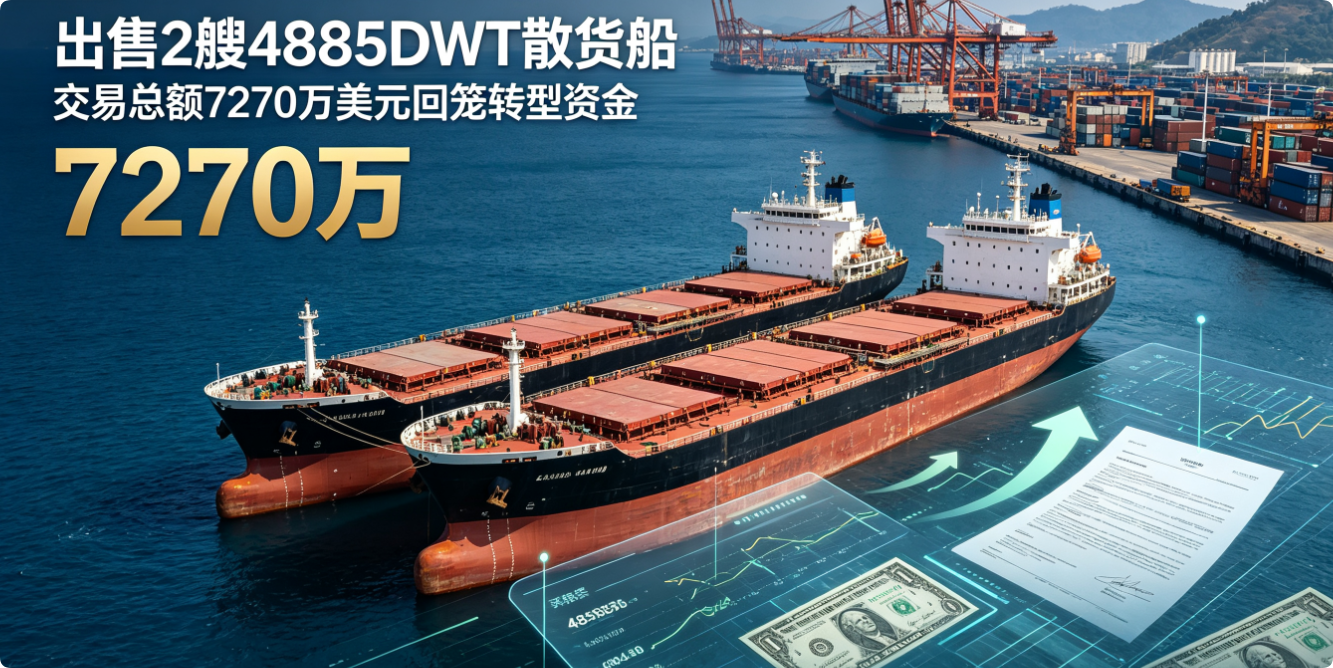
In April, Intercontinental Shipping sold two second-hand 48,785 DWT bulk carriers to Oman’s Asyad Shipping at a total consideration of USD 72.7 million, generating an after-tax gain of USD 25 million; all proceeds will be used for the construction of eco-friendly new vessels.
Seacon Shipping Sells Two 48,785 DWT Bulk Carriers for USD 72.7 Million to Fund Fleet Green Transition
Lead Paragraph
In April 2026, Seacon Shipping, a Southeast Asian dry bulk shipping firm, completed a bundled sale of two 48,785 deadweight tonnage bulk carriers to Asyad Shipping, a leading Omani shipping conglomerate, at a total transaction value of USD 72.7 million. The asset disposal is expected to generate approximately USD 25 million in after-tax profits for the company. All proceeds will be channelled into the construction of low-carbon newbuilds and fleet renewal to accelerate its green shipping transformation strategy.
I. Core Transaction Details
The two modern Supramax bulk carriers delivered in 2023 are named Seacon Vancouver and Seacon Oslo, each with a deadweight tonnage of 48,785 DWT. Designed for transporting bulk commodities including coal, grain, ores and construction materials, they have long operated short-sea and deep-sea trade lanes connecting Southeast Asia, the Middle East and the Far East.
Delivery Schedule
The two vessels will be handed over in batches within the delivery window of October to November 2026. Seacon Shipping shall bear all operating revenues generated and maintenance costs incurred prior to vessel delivery.
Transaction Consideration
The bundled transaction price stands at USD 72.7 million. Thanks to their young age and sound operational condition, the two vessels command relatively high valuations amid the current second-hand bulk carrier market.
Profit Estimation
After deducting the vessels’ book value, transaction taxes and brokerage fees, the transaction will yield an estimated net after-tax profit of USD 25 million, substantially boosting the company’s current cash flow.
II. Core Strategic Rationale for Vessel Disposal
1. Optimize Fleet Propulsion Mix to Comply with Global Emission Regulations
The two vessels run on conventional fossil fuels, and retrofitting them to methanol or LNG dual-fuel propulsion is economically unviable. Retaining them long-term would make it difficult to meet the IMO Carbon Intensity Indicator (CII) and EEXI energy efficiency rules, leading to rising annual carbon tax and emission retrofitting expenses. The sale avoids long-term compliance cost burdens.
2. Capitalize on High Second-Hand Vessel Prices to Realize Asset Appreciation
Over the past two years, prices of mid-sized second-hand bulk carriers worldwide have stayed buoyant, while newbuilding costs have remained elevated. By monetizing its young existing vessels at this market peak, the carrier locks in asset gains and hedges against potential vessel depreciation amid a future shipping downturn cycle.
3. Unlock Internal Capital to Alleviate Newbuilding Financing Pressure
The company holds multiple orders for eco-friendly newbuilds, including four 5,200 DWT multi-purpose cargo ships and six 63,800 DWT ocean-going bulk carriers, entailing massive total capital expenditure. Proceeds from the vessel sale will directly offset newbuilding instalments, reduce reliance on external loans and ship finance leases, and strengthen the balance sheet.
III. Designated Uses of Sale Proceeds
- Settle outstanding construction payments for energy-efficient newbuilds, prioritizing low-carbon tonnage meeting EEDI Phase III standards;
- Supplement working capital for global trade routes to sustain stable long-term dry bulk shipping contracts serving Indonesia and Australia;
- Set aside reserves for security deposits under vessel finance leases to continuously expand the fleet of emission-compliant ocean-going ships;
- Allocate funds to develop green marine fuel bunkering facilities at ports in Singapore and Malaysia.
IV. Strategic Layout Analysis of Both Parties
Seller: Seacon Shipping
The carrier consistently implements a fleet renewal strategy of “selling old high-carbon tonnage for new eco-friendly vessels”. It phases out conventional fuel-powered ships with no viable low-carbon retrofitting potential, and concentrates capital on mass orders for energy-efficient and dual-fuel green vessels. The move builds a modern fleet aligned with global carbon reduction policies and consolidates its leading position in Southeast Asian short-sea dry bulk shipping.
Buyer: Asyad Shipping
As a top Middle Eastern shipping group, Asyad Shipping is ramping up its presence in commodity trade lanes linking the Middle East and Southeast Asia. The acquisition of high-quality young bulk carriers completes its regional capacity network. Driven by Middle Eastern crude oil and mineral export demand, the group expands its dry bulk asset portfolio and diversifies its overall shipping business layout.
V. Industry & Market Outlook
Maritime research institutions predict 2026–2030 will be a critical phase for global shipping decarbonization. Long-term valuations of conventional fuel-powered second-hand vessels will face persistent downward pressure. A widespread industry trend is emerging where major shipowners dispose of existing tonnage during the current second-hand price rally and redirect capital toward green newbuilds.
In the short term, peak export seasons for Indonesian coal and Australian grain will underpin resilient charter rates for mid-sized bulk carriers. Over the medium to long run, shipowners operating low-carbon fleets with firm long-term shipping contracts will open a widening profitability gap with industry peers.

The content on this site is for learning and communication purposes only. It does not provide financial services such as account opening, capital allocation, discretionary trading, or insider trading. Do not trust any private messages recommending stocks or following orders within the site.