


Precious Metals Market Slumps Amid Volatility: Gold Trend Analysis Under Multiple Forces
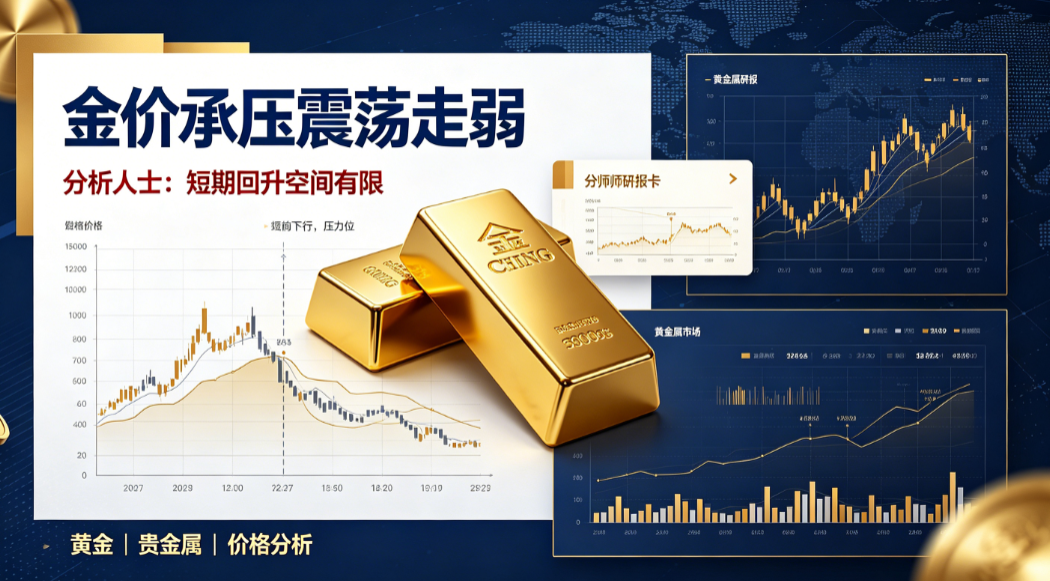
Precious Metals Market Slumps Amid Volatility: Gold Trend Analysis Under Multiple Forces
Keywords: Precious metals, gold prices, Fed, rate hikes, geopolitics, dollar index
Introduction
Since June, the global precious metals market has been under notable pressure. COMEX gold futures slid from the key $4,500/oz level, at one point falling below $4,000 before recovering somewhat after hawkish remarks from Fed officials. Behind this volatility is a complex interaction of Fed policy expectations, geopolitical tensions, and capital flows. This article takes a closer look at the logic behind the current pressure on gold prices and, with insights from industry analysts, explores possible future paths.
1. Fed Rate-Hike Expectations and Dollar Strength Take the Lead
Since June, precious metals prices have been under clear pressure, mainly due to changing expectations for Fed policy. Although US-Iran tensions eased at one point in June and international oil prices kept falling back to levels seen before the March conflict, the market quickly shifted focus to expectations of further Fed rate hikes. Against the backdrop of a stronger dollar index, commodities broadly weakened, capital flowed out of the precious metals market, and gold prices faced continued pressure.
Ye Qianning, a precious metals researcher at GF Futures, said that from a macro perspective, the U.S. economy is currently performing relatively well overall, supported by fiscal stimulus from tax refunds and AI-related capital spending. However, Middle East conflict has lifted energy prices and inflation pressures are rising, while the pass-through to downstream prices is not obvious. This means the Fed faces a more complicated policy trade-off: it must contain inflation expectations without overly suppressing growth momentum.
It is worth noting that the new Fed chair, Wosh, is gradually pushing reforms and reducing market guidance. Ye Qianning said the market may rely more on inflation data and remarks from other voting members to judge the policy path. As energy prices ease and inflation may come under control, some officials lean toward keeping rates unchanged this year or hiking only once, and the market's earlier extreme expectations are likely to be normalized. This offers gold some stage-by-stage support, but the rebound remains limited.
2. The Dual Shock of Geopolitics and Energy Prices
Geopolitical risk has always been a key variable in the precious metals market. Last weekend, US-Iran tensions escalated again, with both sides accusing the other of violating a memorandum of understanding. The risk, which had already cooled, heated up again. Cai Yiqing, a gold researcher at Avic Futures, believes this will intensify volatility in precious metals and gold is more likely to move sideways with swings.
On energy, Middle East conflict has pushed up crude costs, which then feed into gold through inflation expectations. However, the current pullback in energy prices has only a limited positive effect on gold because the market is more focused on the Fed's response. Cai Yiqing advises investors to closely watch Wosh's speech at this week's ECB Forum and the subsequent progress of reforms to the central bank system and communication mechanisms. Wosh's reform direction may profoundly affect how the market forms expectations for Fed decisions, thereby changing the pattern of gold price swings.
3. Market Sentiment and Capital Flows Keep Gold Under Pressure
In addition to macro policy and geopolitical risk, market sentiment and capital flows are also important factors suppressing gold prices. Ye Qianning pointed out that the hot AI sector has drawn capital into equities, creating a siphon effect that has kept investment and consumption demand for precious metals weak. Without new positive catalysts, gold still has room to rebound after being oversold, but the recovery will be limited. She believes international gold prices face technical resistance around $4,200/oz; if the U.S. economy remains strong, that will again weigh on gold.
On the funding side, COMEX positioning data show that speculative long positions have continued to fall since June, while safe-haven sentiment has not risen significantly. This suggests that market appetite for gold as a safe-haven asset is declining, with investors shifting toward high-growth assets such as tech stocks. In the short term, this capital rotation will continue to cap gold's upside.
4. Analyst Views and Outlook
Taking the two analysts' views together, gold still faces multiple pressures in the short term. Ye Qianning recommends watching U.S. nonfarm payrolls data and the US-Iran situation for their impact on the dollar index and the strength/weakness shift in gold. She believes gold has technical rebound potential after being oversold, but with no new positive catalyst and the siphon effect of AI capital, the recovery is limited, and the area around $4,200/oz is key resistance.
Cai Yiqing, from a medium- to long-term perspective, emphasized that continued central bank gold buying still supports prices. Although Fed rate-hike expectations are pressuring gold in the short term, central banks are increasing gold reserves to diversify foreign-exchange holdings, providing a floor for prices. She advises investors to keep a close eye on Fed officials' remarks and the market's process of revising rate-hike expectations, especially Wosh's speech at this week's ECB Forum, which may become a catalyst for short-term volatility.
Conclusion
The current precious metals market is in a volatile pattern shaped by multiple forces: Fed rate-hike expectations and a stronger dollar are the main headwinds; geopolitical risks and energy-price swings are adding uncertainty; and the AI sector's capital siphon is weakening gold investment demand. In the short term, gold has room to rebound after being oversold, but the recovery remains limited, with around $4,200/oz as key resistance. In the medium to long term, continued central bank gold buying provides basic support, but the future trend still depends on the evolution of Fed policy, the development of geopolitical tensions, and shifts in market risk appetite. Investors should stay cautious and closely watch the upcoming U.S. nonfarm payrolls data and Fed officials' speeches to capture turning points in market momentum.

The content on this site is for learning and communication purposes only. It does not provide financial services such as account opening, capital allocation, discretionary trading, or insider trading. Do not trust any private messages recommending stocks or following orders within the site.