


Seacons Marine Acquires Two Chemical Tankers for US$39.2 Million to Deepen Its Footprint in the Asia-Pacific Liquid Chemical Shipping Sector
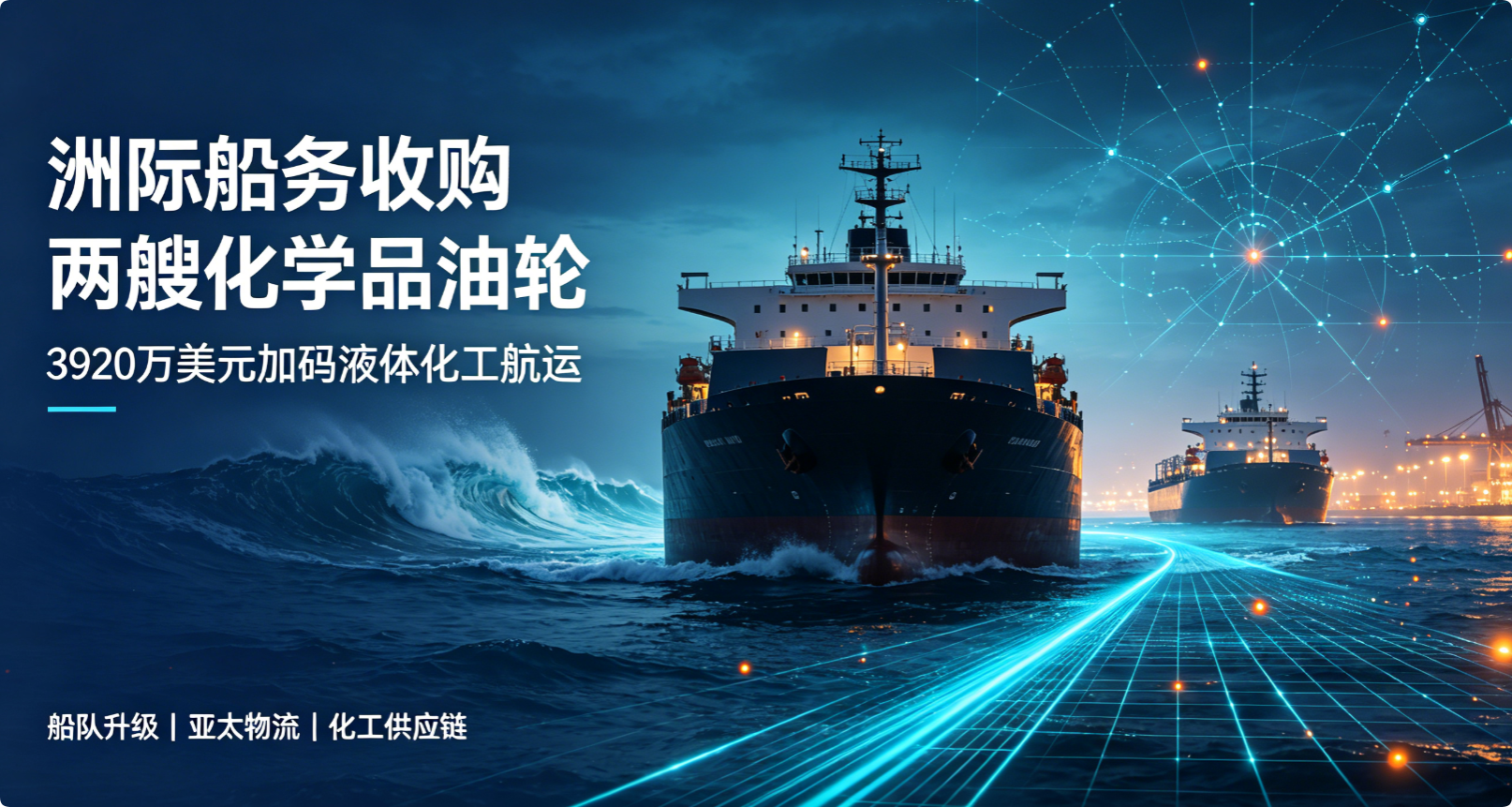
Seacons Marine has completed the acquisition of new vessels worth USD 39.2 million, adding two eco-friendly chemical tankers of 4,981 DWT each. The company will continue to phase out aging, high-energy-consumption ships to upgrade its green fleet layout, deepen its engagement in cross-border maritime transportation of liquid chemicals in Southeast Asia,
I. Details of the Vessel Acquisition Transaction
The acquisition targets are two newly built eco-friendly chemical tankers with a deadweight tonnage of 4,981 DWT each. The transaction price for a single vessel stands at US$19.6 million, with a total investment of US$39.2 million for both vessels. Complying with the latest safety and carbon emission control standards set by the International Maritime Organization (IMO), the vessels can safely carry various liquid cargoes including fine chemical raw materials, refined oil products and solvents, and are suitable for multiple short-sea shipping routes for fine chemical transportation.
Both new vessels have recently been completed and delivered. The Company will avoid the high operation, maintenance, inspection and retrofitting costs associated with aging vessels, enabling rapid deployment on shipping routes across the Asia-Pacific region. Through this capacity purchase, the Company will phase out some of its aging, high-energy-consuming liquid cargo vessels, realizing the renewal and upgrading of its fleet toward younger and greener tonnage.
II. Layout of Liquid Chemical Shipping to Capture Dividends from Southeast Asian Chemical Trade
In recent years, with the rapid construction of chemical industrial parks across Southeast Asia, the cross-border import and export volume of fine chemical raw materials and petrochemical derivatives in the region has kept rising, driving steady growth in maritime demand for liquid chemical products. Supported by the tariff benefits under the Regional Comprehensive Economic Partnership (RCEP), industrial chain coordination between China and ASEAN countries has deepened continuously, leading to an expanding supply gap for short-sea liquid chemical transportation.
Previously, Seacons Marine’s shipping capacity was primarily concentrated in dry bulk transportation, focusing on ocean carriage of bulk commodities such as coal, grain and construction materials. Its entry into the chemical tanker segment marks the official formation of a dual-core capacity layout covering both dry bulk and liquid chemical shipping. The two new vessels will mainly operate between core Asia-Pacific chemical trade ports including China, Vietnam, Thailand, Singapore and Malaysia, undertaking cross-border storage, transshipment and transportation of chemical raw materials to fully tap into logistics dividends from the regional chemical supply chain.
III. Alignment with Green Shipping Policies to Mitigate Carbon Compliance Risks
Equipped with low-energy power systems, the two new chemical tankers meet IMO’s Carbon Intensity Indicator (CII) energy efficiency rating requirements and can smoothly pass compliance reviews under the EU Carbon Border Adjustment Mechanism (CBAM). Against the global low-carbon transition trend in shipping, aging liquid cargo vessels suffer from not only excessive operation and maintenance costs but also multiple operational pressures including stringent carbon emission caps and route access restrictions.
Replacing aging tonnage with new vessels will drastically cut fuel consumption and carbon emissions, lowering the risk of environmental compliance fines. Meanwhile, the green vessel certifications will entitle the Company to preferential berthing policies at ports worldwide and shipping tax incentives, further boosting its bargaining power on shipping routes and expanding the scope of accessible business.
IV. Diversified Fleet Layout to Enhance Counter-Cyclical Resilience
Global dry bulk freight rates currently feature pronounced cyclical fluctuations, and a single-business model is vulnerable to shocks from shifts in bulk commodity supply and demand as well as volatile ocean freight rates. By expanding into chemical shipping, Seacons Marine can hedge operational pressures arising from cyclical downturns in the dry bulk market and stabilize revenue streams via two differentiated cargo categories.
Following the Company’s previous large-scale acquisitions of multiple bulk carriers and multi-purpose dry cargo vessels, it is continuously building a multi-tier capacity matrix covering short-sea and ocean shipping. Its business scope has expanded from traditional bulk maritime transport to liquid chemical logistics and high-end vessel management. Relying on its growing Asia-Pacific route network, the Company keeps expanding its market share in cross-border supply chain services.
V. Industry Outlook
As Southeast Asia’s chemical industrial clusters continue to expand, cross-border transportation demand for regional liquid chemicals will maintain an upward trend in the long run. Taking the two newly acquired chemical tankers as a starting point, Seacons Marine will further scale up its liquid cargo fleet and deepen its presence in the niche Asia-Pacific liquid chemical shipping segment. Leveraging professional vessel operation capabilities, the Company will deliver stable, compliant and efficient cross-border logistics solutions for regional chemical trading enterprises. Amid the prevailing drive toward green and low-carbon shipping, the Company will persist in phasing out old vessels and deploying high-efficiency new tonnage. Supported by its diversified capacity layout, it will consolidate its position as a leading domestic vessel management enterprise.

The content on this site is for learning and communication purposes only. It does not provide financial services such as account opening, capital allocation, discretionary trading, or insider trading. Do not trust any private messages recommending stocks or following orders within the site.