


Seacons Innovates Sale-and-Leaseback Operation Model to Optimize Fleet Asset Structure and Steadily Expand Its Footprint in the Southeast Asian Shipping Market
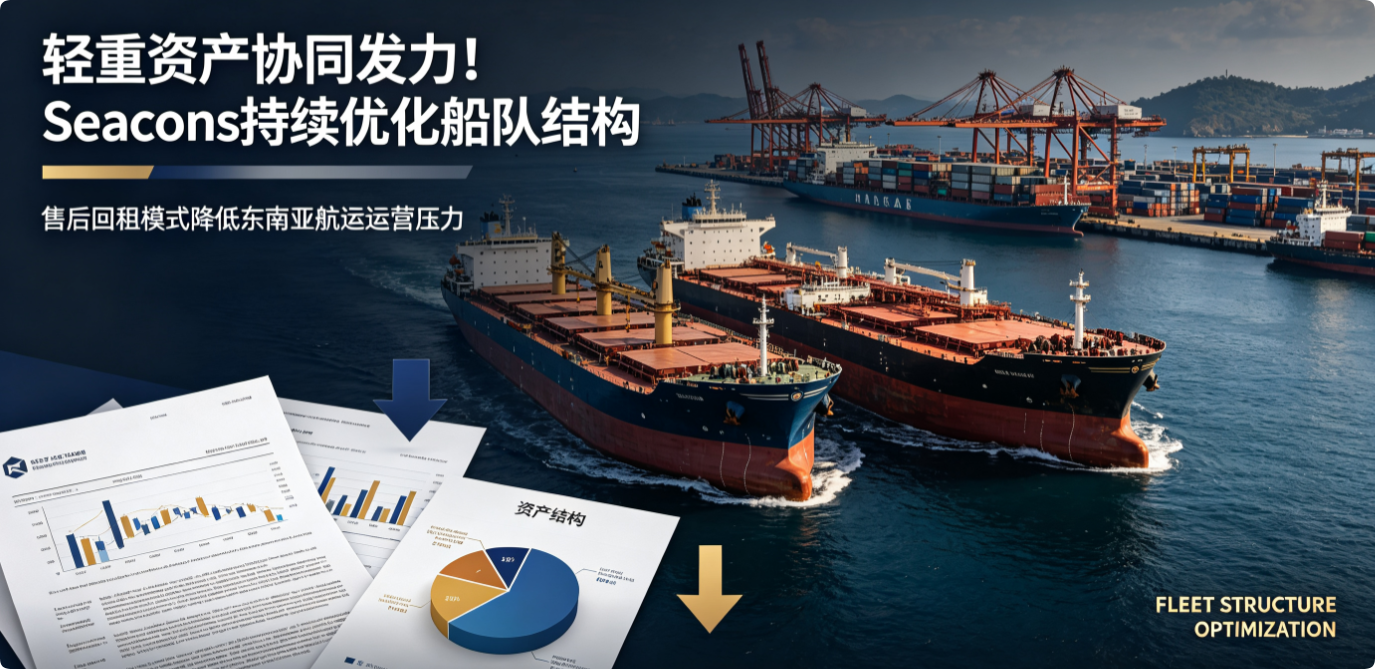
Seacons Shipping consistently adopts the lightweight operation model of sale-and-leaseback to optimize the asset structure of new vessels, ease the pressure of large capital expenditure, flexibly adapt to freight fluctuations on routes to Southeast Asia and the Middle East, and ensure large-scale and stable fleet operation.
English Translation (Formal shipping & financial report tone)
Against an industry backdrop of amplified global shipping freight volatility and persistently high newbuilding costs, Seacons Shipping has consistently implemented a sophisticated asset-light and asset-heavy integrated operation strategy. It unlocks value from batches of new vessels via sale-and-leaseback financing arrangements to optimize the fleet’s overall financial structure, effectively hedge against cyclical industry risks, and steadily deepen its presence in core maritime markets across Southeast Asia, the Middle East and Australia.
In contrast to the capital-intensive full-outright vessel acquisition model, Seacons routinely adopts sale-and-leaseback cooperation solutions for newly built bulk carriers, chemical tankers and dual-fuel eco-friendly vessels. After completing the purchase and delivery of new ships, the Group legally leases out vessel assets to professional financial leasing institutions while retaining long-term operational and route trading rights to the vessels. This model eliminates massive one-off capital outlays and greatly eases corporate cash flow pressure. The freed-up capital can be continuously reinvested in core businesses including fleet renewal, expanded shipping frequency and marine technology R&D.
Leveraging its lightweight asset layout, Seacons can flexibly respond to dynamic shifts in Southeast Asia’s shipping market. ASEAN commodity trade has seen pronounced ups and downs in recent years, accompanied by periodic swings in regional freight rates for dry bulk and chemical seaborne transport. Traditional asset-heavy shipping companies are highly vulnerable to losses during freight troughs. By contrast, the asset-light operation framework delivers exceptional market agility: the Group can dynamically allocate tonnage and adjust voyage schedules in response to cargo volume fluctuations on routes linking Southeast Asia with the Middle East, Northeast Asia and Australia, maximizing vessel turnover and revenue efficiency.
To date, multiple batches of the Group’s newly constructed vessels have been delivered through sale-and-leaseback structures, covering mainstream ship types such as supramax bulk carriers, stainless steel chemical tankers and dual-fuel green vessels. This has built a two-tier fleet system combining owned core tonnage and flexible leased capacity. The proven operational framework guarantees stable capacity on key Southeast Asian trade lanes while mitigating substantial asset impairment risks amid industry downturns.
Industry analysts note that the drawbacks of reckless asset-heavy expansion have become prominent amid growing cyclical divergence in the shipping sector. Seacons’ long-standing coordinated asset-light and asset-heavy strategy is precisely tailored to the diversified, volatile nature of cross-border ASEAN trade. It strikes a sound balance between capacity expansion and operational risks, laying solid financial and operational foundations for the Group to sustain its long-term development in ASEAN shipping and fully capture trade dividends under the RCEP. Moving forward, the company will replicate this mature model to steadily expand its low-carbon, specialized tonnage and consolidate its leading position in regional niche shipping segments.

The content on this site is for learning and communication purposes only. It does not provide financial services such as account opening, capital allocation, discretionary trading, or insider trading. Do not trust any private messages recommending stocks or following orders within the site.