


Seacons Marine Disposes of an Ocean-Going Bulk Carrier for US$37.5 Million to Accelerate Green Fleet Renewal and Upgrade
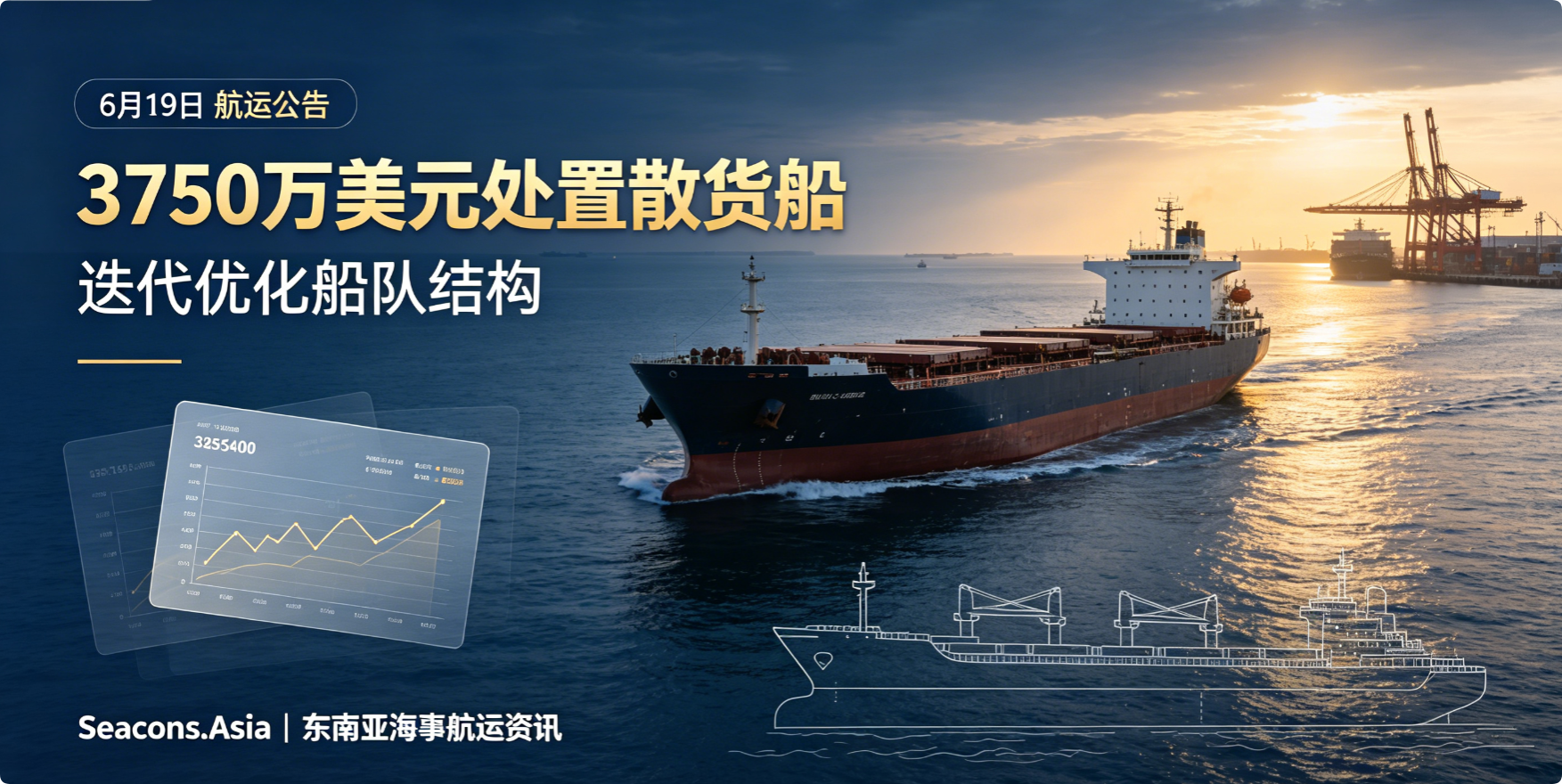
On June 19, Seacons Marine announced the sale of an operational bulk carrier for US$37.5 million. By divesting its aging, high-energy-consuming tonnage, the company recoups capital, optimizes its fleet structure, cuts costs and improves efficiency to strengthen its layout in the dry bulk shipping market of Southeast Asia, in line with the global trend of green and low-carbon development in the shipping industry.
Revitalize Existing Shipping Assets and Phase Out Aging Vessels to Cut Costs, Boost Efficiency and Build a Young, Eco-Friendly Fleet
On June 19, Seacons Marine Group issued an official announcement stating that its wholly-owned subsidiary had completed the sale of an operational ocean-going bulk carrier for a total transaction value of US$37.5 million. Meanwhile, the Group exercised its priority purchase rights under a bareboat charter contract to steadily advance its strategy of optimizing and upgrading fleet assets.
The bulk carrier sold in this transaction is an aging conventional vessel plagued by high energy consumption and year-on-year rising maintenance costs. Through this asset divestment, the Group can rapidly recover working capital to fund future new vessel purchases, shipping route expansion and low-carbon retrofits of existing ships. Additionally, the disposal successfully eliminates high-emission aging tonnage and lowers the average age of its overall fleet, aligning with the International Maritime Organization’s green emission reduction regulations.
The global shipping industry has accelerated its low-carbon transformation in recent years. Major ports have rolled out new rules governing vessel carbon emissions and fuel sulfur limits, driving up compliance costs for outdated vessels. Adopting a dual-track strategy of disposing aging ships and contracting energy-efficient newbuilds, Seacons Marine has secured orders for multiple modern bulk carriers at shipyards in Zhoushan, China and several Japanese shipyards. These new vessels deliver marked advantages in fuel consumption, exhaust emissions and intelligent navigation equipment, effectively cutting operational expenses on long-distance ocean trade lanes.
With its optimized young fleet, the Group will deepen its presence in the dry bulk shipping markets of Southeast Asia, Australia and New Zealand, securing steady cargo volumes for cross-border transportation of bulk commodities including coal, ores, grain and construction materials. Ample cash flow will also support the Group’s expansion into liquid bulk shipping and port-related maritime services, diversifying its comprehensive shipping business portfolio.
Industry analysts note that amid volatile global freight rates and tightening environmental regulations, proactively phasing out aging tonnage and renewing fleet composition has become a mainstream operational strategy for leading shipping companies. This US$37.5 million vessel disposal will not only help Seacons Marine reduce costs and improve operational efficiency, but also further strengthen its market competitiveness in the Asia-Pacific dry bulk shipping sector, laying a solid foundation for the company’s long-term stable development.

The content on this site is for learning and communication purposes only. It does not provide financial services such as account opening, capital allocation, discretionary trading, or insider trading. Do not trust any private messages recommending stocks or following orders within the site.