


Fidelity International: Gold Bull Market Strategy for 2027
Myths and Truths of the Gold Market: Fidelity International's Long-Term Strategy
Introduction: Short-Term Weakness, Long-Term Strength in Gold
In today's rapidly changing global financial markets, gold's status as a safe-haven asset remains in focus. Ian Samson, portfolio manager at Fidelity International, recently shared striking views. He noted that despite gold experiencing its worst quarterly performance in over a decade, the core trends that drove gold to earlier record highs remain solid. He predicts gold will re-enter a bull market in 2027 and recommends investors shift gold allocation from "neutral" to "overweight." These views not only reveal the deep structure of the gold market but also provide investors an opportunity to reassess asset allocation strategies.
1. Bull Market Logic Intact: Structural Support Remains Solid
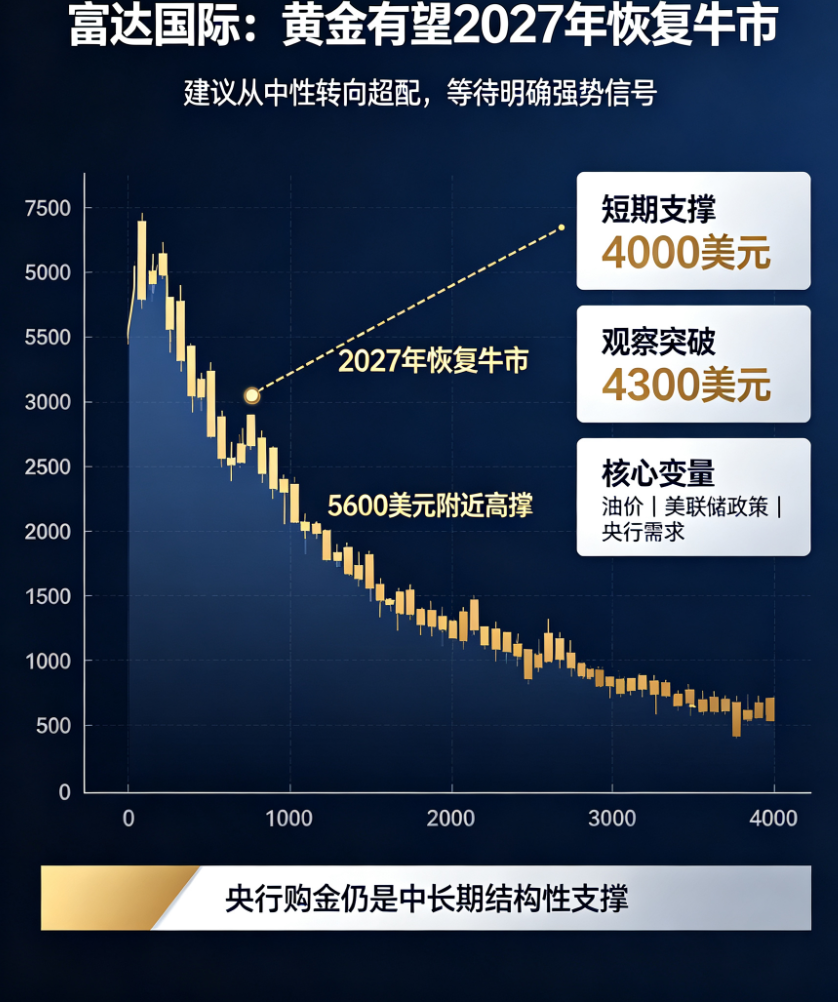
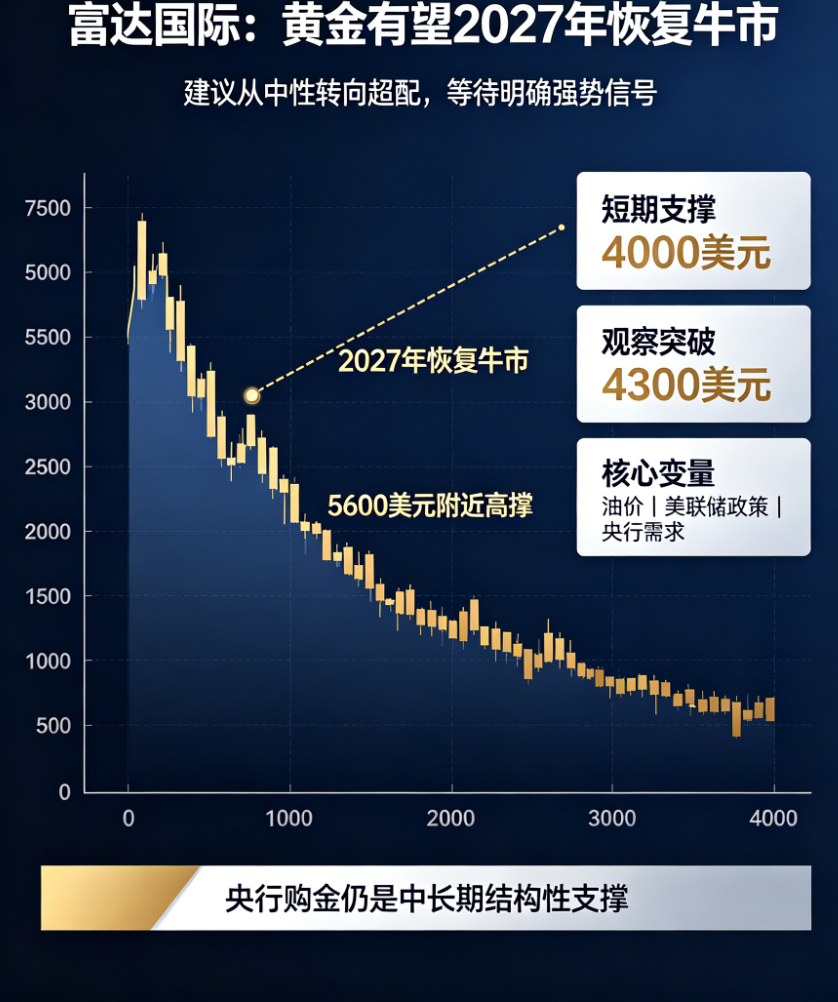
In a recent interview, Samson emphasized: "We plan to add gold again. The question is when to act." This statement reflects an important market insight: gold's long-term trajectory is not altered by short-term fluctuations. Earlier this year, gold pulled back from nearly $5,600 per ounce and fell further after the Iran war erupted, but the core logic supporting gold's long-term trend—global macroeconomic uncertainty, central bank easing policies, and persistent geopolitical risks—has not fundamentally changed.
From a macro perspective, the global economy faces multiple challenges: high inflation, diverging major central bank policies, and recurring geopolitical conflicts. These factors together create fertile ground for gold price increases. Samson notes that as long as the premise of "governments returning to orthodox fiscal policies and central banks truly striving to reduce inflation" is not met, the bullish case for gold remains unshaken. In other words, the current operation of the world economy continues to provide structural upward momentum for the gold market.
Notably, Samson likens this support to an "almost inevitable trend." He emphasizes central bank demand as the most important structural force supporting gold's medium- and long-term price. These "large-scale, structural, and strategically significant buyers"—global central banks—are continuously increasing gold reserves, a trend that has become a stable factor driving gold prices higher. In fact, central banks in China, Russia, India, and others have been systematically adding gold reserves, reflecting distrust in the dollar-dominated monetary system and urgent need for diversified foreign reserves.
2. Tactical Pullback: Short-Term Adjustment Does Not Change Long-Term Trend
Despite long-term bullishness, Fidelity does not expect gold to immediately resume its upward momentum. Samson clearly stated: "From a tactical perspective, there are as many headwinds as tailwinds currently. I expect gold to end the year slightly above current levels." This cautious short-term forecast contrasts sharply with his firm confidence in the long-term trend, highlighting the patience and strategic vision required for gold investing.
From a technical analysis perspective, Samson believes gold may find support near $4,000 per ounce in the near term. He is looking for clearer strength signals, with the first bullish signal being the 50-day moving average breaking above the long-term moving average or gold rising above $4,300 per ounce. "That would indicate upward pressure is emerging," he adds. These technical indicators provide specific observation points for investors and reflect the process of market momentum shifts.
Notably, between January and February this year, Samson downgraded his gold holding rating from "overweight" to "neutral," just before the multi-year bull run ended. This precise timing demonstrates his keen understanding of market cycles and explains why his current "overweight" recommendation is particularly valuable. The shift from tactical reduction to strategic addition is based on deep market cycle insight: when most investors panic from short-term declines, long-term investors find opportunities to position.

3. The Art of Long-Term Positioning: Fidelity's Overweight Strategy
Samson recommends investors shift gold allocation from "neutral" to "overweight." The logic behind this advice is worth pondering. As a non-yielding asset, gold price fluctuations are closely tied to interest rate environments, inflation expectations, and market risk sentiment. In the current context of relatively high interest rates, easing inflation pressures, and rising global economic uncertainty, gold's strategic value is re-emerging.
From an asset allocation perspective, overweighting gold requires investors to weigh multiple variables. Samson notes that the timing and degree of gold's recovery will depend on several key variables: future oil price trends, Fed interest rate policy, and whether the gold market itself can rebuild and sustain upward momentum. These variables are interconnected and interact to determine gold's short-term fluctuations and long-term trend.
Among them, oil prices, as the "lifeblood" of the global economy, not only affect inflation expectations but also directly reflect geopolitical risks. Recent tensions in the Middle East have increased oil price volatility, further supporting safe-haven demand. Fed interest rate policy directly impacts dollar strength, which in turn affects gold's appeal. When the Fed maintains a hawkish stance, a stronger dollar often suppresses gold; conversely, when rate cut expectations heat up, gold gains strong support.
4. Central Bank Demand: The Strongest Engine for Long-Term Gold Price Rise
Samson emphasizes central bank demand as the "ballast" of the gold market. Amid challenges to the global monetary system, central banks are increasing gold reserves, making this trend the most important structural force supporting gold's medium- and long-term price. According to the World Gold Council, global central bank net gold purchases reached a record high in 2023, with emerging market countries as major buyers.
Behind this demand lies a reflection and adjustment of the existing monetary system. With the Fed continuously raising rates and dollar liquidity tightening, many countries seek to reduce dollar dependence. As a hard asset with no sovereign risk, gold naturally becomes the first choice for central bank reserve diversification. Geopolitical risk escalation has accelerated this process, especially after sanctions on Russia's central bank, making more countries realize the importance of holding gold as reserves.
"With these large-scale, structural, and strategically significant buyers (central banks), it is almost inevitable for gold prices to rise," Samson's words not only reveal the unique structure of the gold market but also provide long-term investors with important investment logic. Unlike retail investors, central bank gold purchases are often unaffected by short-term price fluctuations, and this stable demand provides long-term support for the gold market.
Conclusion: Patiently Awaiting 2027
In summary, Fidelity International's assessment of the gold market shows a clear investment logic: short-term volatility need not cause panic; the long-term trend is already established. Samson predicts gold will re-enter a bull market in 2027. Although the timeline is somewhat vague, it reflects a rational understanding of market cycles. For investors, the current market environment is both a challenge and an opportunity.
Amid global economic uncertainty, gold's strategic value as a safe-haven asset is being reassessed. Sustained central bank gold purchases, persistent geopolitical risks, and expectations of monetary policy shifts collectively form the fundamental basis for a long-term positive gold market. Although short-term volatility may continue, for patient and disciplined long-term investors, the current market adjustment is undoubtedly a good opportunity to increase holdings of quality assets.
Finally, Samson's advice provides important reference for investors: shifting from "neutral" to "overweight" is not just a judgment on the gold market but a strategic positioning for the future global economic landscape. In an era of globalization challenges, geopolitical turmoil, and monetary order restructuring, gold's value extends far beyond being an inflation hedge—it is a cornerstone for wealth preservation and growth. 2027 may be just a point in time, but the story of the gold market is only beginning.

The content on this site is for learning and communication purposes only. It does not provide financial services such as account opening, capital allocation, discretionary trading, or insider trading. Do not trust any private messages recommending stocks or following orders within the site.