


Gold Futures Drift Lower; Is a Safe-Haven Allocation Opportunity Emerging?
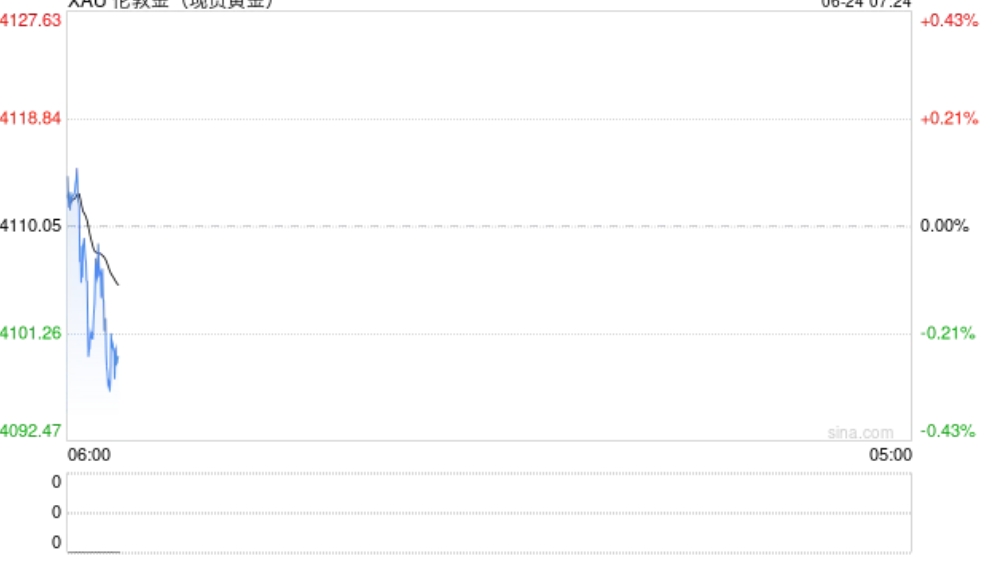
Gold Futures Drift Lower; Is a Safe-Haven Allocation Opportunity Emerging?
Keywords
Gold futures, safe-haven assets, asset allocation, market divergence, investment strategy
Introduction
As global economic uncertainty continues to intensify, gold's status as a traditional safe-haven asset remains robust. However, international gold prices have recently shown a rare multi-session decline, prompting investors to ask: is this a sign of a short-term correction, or a turning point in the longer-term trend? At 6:00 p.m. Beijing time on June 23, the August gold futures contract on the New York Commodity Exchange (COMEX) had fallen for several straight days and was quoted at $4,133/oz at the time of writing. At the same time, the domestic Shanghai gold futures main contract 2608 also fell below the 900 yuan/gram mark, closing at 897.9 yuan/gram. The volatility is not only testing investors' judgment but also sparking lively discussion in the industry about gold allocation strategies.
Main Text
1. International Gold Prices Face Short-Term Pressure as Multiple Factors Intertwine
Looking back at recent trading, the COMEX gold August contract started a sustained downtrend after posting a cyclical high of $4,403/oz on June 17. In just a few days, the contract broke below the key psychological level of $4,200/oz, for a drop of more than 6%. Meanwhile, the domestic Shanghai gold futures main contract also weakened, falling below 900 yuan/gram and settling at 897.9 yuan/gram. This significant pullback clearly diverged from the market's earlier expectation that safe-haven sentiment would keep pushing gold higher.
The reasons mainly include the following: First, expectations for Fed policy have been repeatedly adjusted. Recent U.S. economic data have been strong, especially the labor market's resilience, which has exceeded expectations. Markets now see a higher likelihood that the Federal Reserve will keep rates high in the second half of 2026, or even raise them further, which has strengthened the dollar index and pressured dollar-denominated gold. Second, risk assets globally have recovered. As AI, new energy, and other tech sectors remain active, capital has clearly shifted from safe-haven assets to risk assets, reducing the appeal of gold as a non-yielding asset. Third, technical selling has been triggered. After a prolonged rise in gold prices, some longs took profits, and the leverage effect of algorithmic trading accelerated the decline.
2. Analysts Disagree on the Move, but Their Allocation Advice Converges
On this round of weakness, the views of several interviewed analysts were somewhat split. Some believe this is a short-term technical correction and that gold still has room to return to higher levels after digesting negative factors; others are more cautious, pointing out that if the U.S. economy stays strong, gold may enter a medium-term downtrend.
However, it is worth noting that although opinions differ on the short-term path, analysts generally recommend that investors allocate on the right timing for related assets such as gold stocks, gold funds, and gold futures. Their reasoning rests on several points: first, global geopolitical risks have not disappeared, and uncertainties in the Middle East and the European energy situation still exist, so gold's core safe-haven function remains unchanged. Second, central banks around the world have continued to increase gold reserves from 2025 to 2026, providing solid support for prices. Third, from a portfolio perspective, gold has relatively low correlation with traditional assets such as stocks and bonds, and an appropriate allocation can help reduce overall portfolio volatility.
3. Investment Strategy and Risk Management for Gold-Related Assets
For ordinary investors, how to formulate a reasonable strategy amid current gold price volatility is crucial. First, investors should clearly identify their own risk tolerance and investment objectives. Gold futures carry high leverage and violent price swings, making them suitable for investors with professional knowledge and risk-management capability. Gold funds such as ETFs and gold stocks are relatively more stable and better suited to small and mid-sized investors.
Second, timing your allocation does not mean blindly following the crowd. Analysts suggest using a staged-entry strategy, buying gradually during pullbacks rather than going all in at once. For example, when COMEX gold futures retreat to around $4,000/oz, that could be seen as a relatively reasonable allocation zone. At the same time, setting stop-loss levels is also necessary risk management to prevent excessive losses if prices continue to fall.
In addition, for long-term investors holding gold-related assets, short-term fluctuations should not cause excessive panic. Historical experience shows that over the past 20 years gold has gone through multiple sharp corrections, yet each time it ultimately went on to make new highs. The current pullback may simply be an opportunity for those who missed the earlier rally to get in.
4. Outlook and How Investors Should Respond
Looking ahead, gold prices will mainly depend on several variables: first, the actual path of Fed policy. If U.S. inflation reaccelerates and forces the Fed to hike rates, gold may remain under pressure; conversely, if signs of recession appear and rate-cut expectations rise, that will be positive for gold. Second, central bank gold buying. In recent years, countries such as China and India have continued to increase their gold reserves, a trend that is hard to reverse in the short term and should provide long-term support for gold. Third, the evolution of safe-haven sentiment. If geopolitical conflicts escalate or financial markets face a liquidity crisis, capital will quickly rush into gold as a refuge.
Overall, the current pullback in gold prices is more a short-term adjustment of macro expectations than a fundamental reversal in the underlying picture. For ordinary investors, there is no need to panic-sell because of a brief drop, but chasing prices higher blindly is also unwise. The rational approach is to stay close to the market, adjust positions flexibly according to your own situation, and look for paced allocation opportunities amid volatility.
Conclusion
The short-term volatility in the gold futures market reflects the complex interplay in global financial markets under macro uncertainty. Although analysts disagree on the short-term trend, they have reached a rare consensus on the long-term allocation value of gold. As several interviewees suggested, assets such as gold stocks, gold funds, and gold futures are already attractive at current price levels and are worth allocating on the right timing. However, opportunity and risk coexist, and investors must remember the importance of risk management when participating, avoiding emotional decisions. Only through rational analysis and disciplined execution can one capture a proper investment rhythm in this gold-price swing.

The content on this site is for learning and communication purposes only. It does not provide financial services such as account opening, capital allocation, discretionary trading, or insider trading. Do not trust any private messages recommending stocks or following orders within the site.